
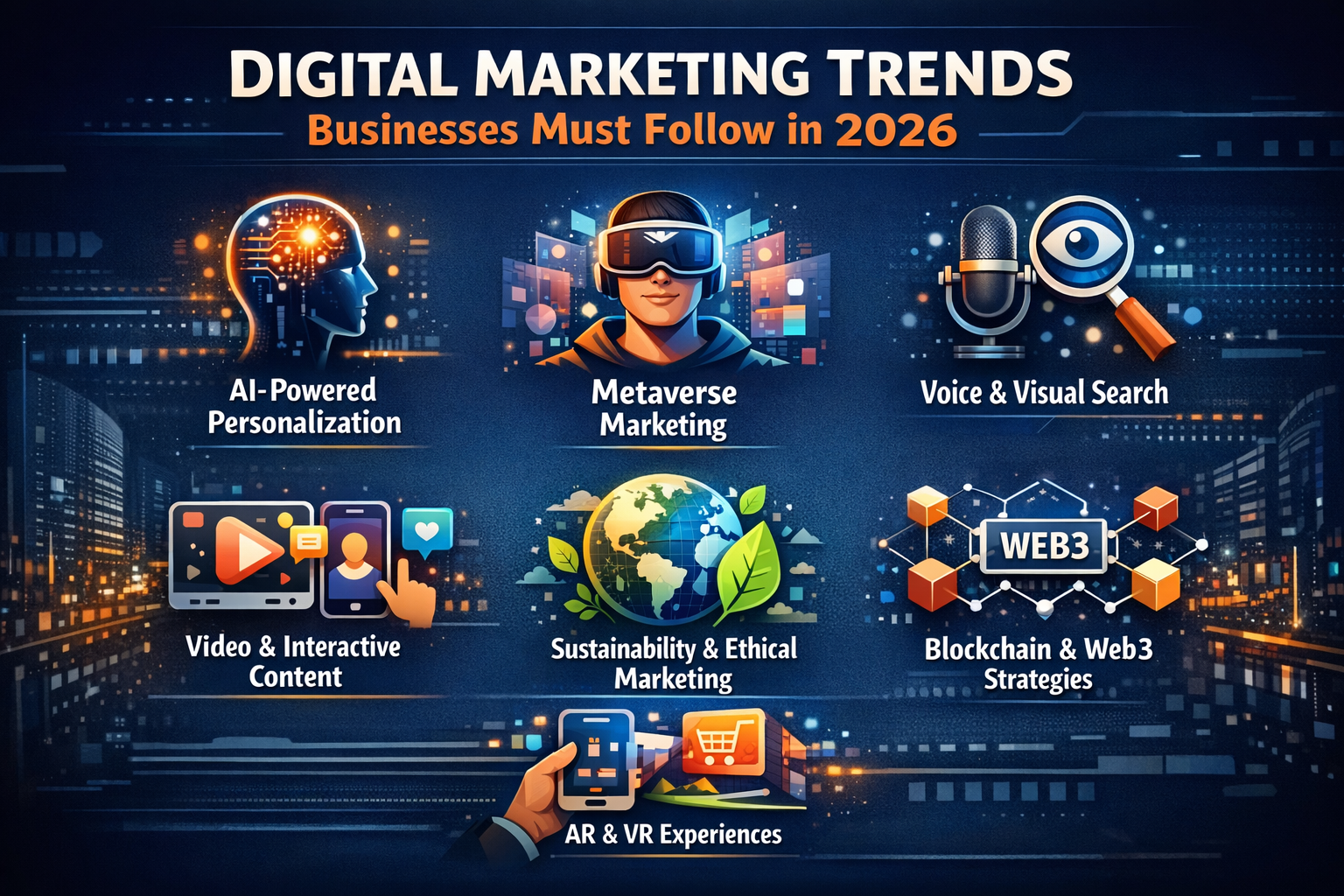
Digital marketing in 2026 is driven by technology, data, and changing user behavior. Businesses that adapt to these trends can grow faster, generate more leads, and stay ahead of competitors. The focus is no longer just on promotion—it’s about smart, personalized, and integrated marketing.
AI is Becoming the Core of Marketing
Artificial Intelligence is no longer optional. It is now the backbone of digital marketing.
Businesses use AI for:
- Content creation
- Audience targeting
- Campaign automation
- Performance analysis
AI helps marketers work faster and make better decisions. Some companies are already speeding up campaign creation significantly using AI tools.
Short-Form Video is Dominating
Short videos are the most powerful content format today. Platforms like reels and shorts are driving higher engagement than traditional posts.
Video content:
- Grabs attention quickly
- Increases engagement
- Improves conversions
Brands using video-first strategies are seeing much better performance compared to text-only content.
Hyper-Personalization is the New Standard
Customers expect personalized experiences. Generic marketing no longer works.
Businesses are now using data and AI to:
- Show personalized ads
- Recommend products
- Send targeted emails
This improves customer experience and increases conversion rates significantly.
SEO is Evolving with AI (AEO)
Search engine optimization is changing. It’s not just about keywords anymore.
In 2026:
- AI-driven search results are increasing
- Answer-based content (AEO) is growing
- User intent matters more than keywords
Businesses need to create high-quality, informative content that directly answers user queries.
Social Commerce is Growing Rapidly
Social media is no longer just for engagement—it’s a selling platform.
Users can now:
- Discover products
- Watch videos
- Buy directly within apps
This reduces the buying journey and increases conversions.
Authentic Content is More Important Than Ever
People trust real content over polished ads.
Brands that show:
- Behind-the-scenes
- Real experiences
- Honest reviews
build stronger trust and long-term relationships. Authenticity is becoming a key success factor.
Influencer Marketing is Shifting
Traditional influencers are being replaced by micro and niche creators.
Smaller creators have:
- Higher engagement
- More trust
- Better conversion rates
Brands are now focusing on quality partnerships instead of just large audiences.
First-Party Data is Critical
With privacy changes and the decline of third-party cookies, businesses must collect their own data.
This includes:
- Email lists
- Customer behavior data
- Website analytics
Owning your data helps in better targeting and long-term marketing stability.
Cross-Channel Marketing is Essential
Using one platform is not enough. Businesses need to combine multiple channels like SEO, social media, email, and ads.
Integrated marketing:
- Improves consistency
- Increases reach
- Boosts conversions
Automation tools help manage all channels efficiently.
Experiential and Interactive Marketing is Rising
Customers want experiences, not just ads.
Trends include:
- Live events
- Interactive content
- AR/VR experiences
Brands that create engaging experiences see better customer connection and recall.
Conclusion
Digital marketing in 2026 is all about AI, personalization, video content, and integration. Businesses that focus on value, authenticity, and smart technology will achieve better growth.
To stay competitive, adapt quickly, use data effectively, and combine multiple marketing strategies.