Contents
- 1 Introduction
- 2 1. Define Your Goals
- 3 2. Identify Your Target Audience
- 4 3. Choose the Right Platforms
- 5 4. Create a Content Strategy
- 6 Steps to Build a Content Strategy
- 7 5. Engage Consistently
- 8 6. Monitor Analytics and Performance
- 9 7. Optimize and Adjust Your Strategy
- 10 Common Mistakes to Avoid
- 11 Conclusion
Introduction
Social media is one of the most powerful tools for growing your brand online. A strong social media presence helps you connect with your audience, increase engagement, and build credibility. Whether you are a small business, freelancer, or influencer, having a structured approach can make all the difference.
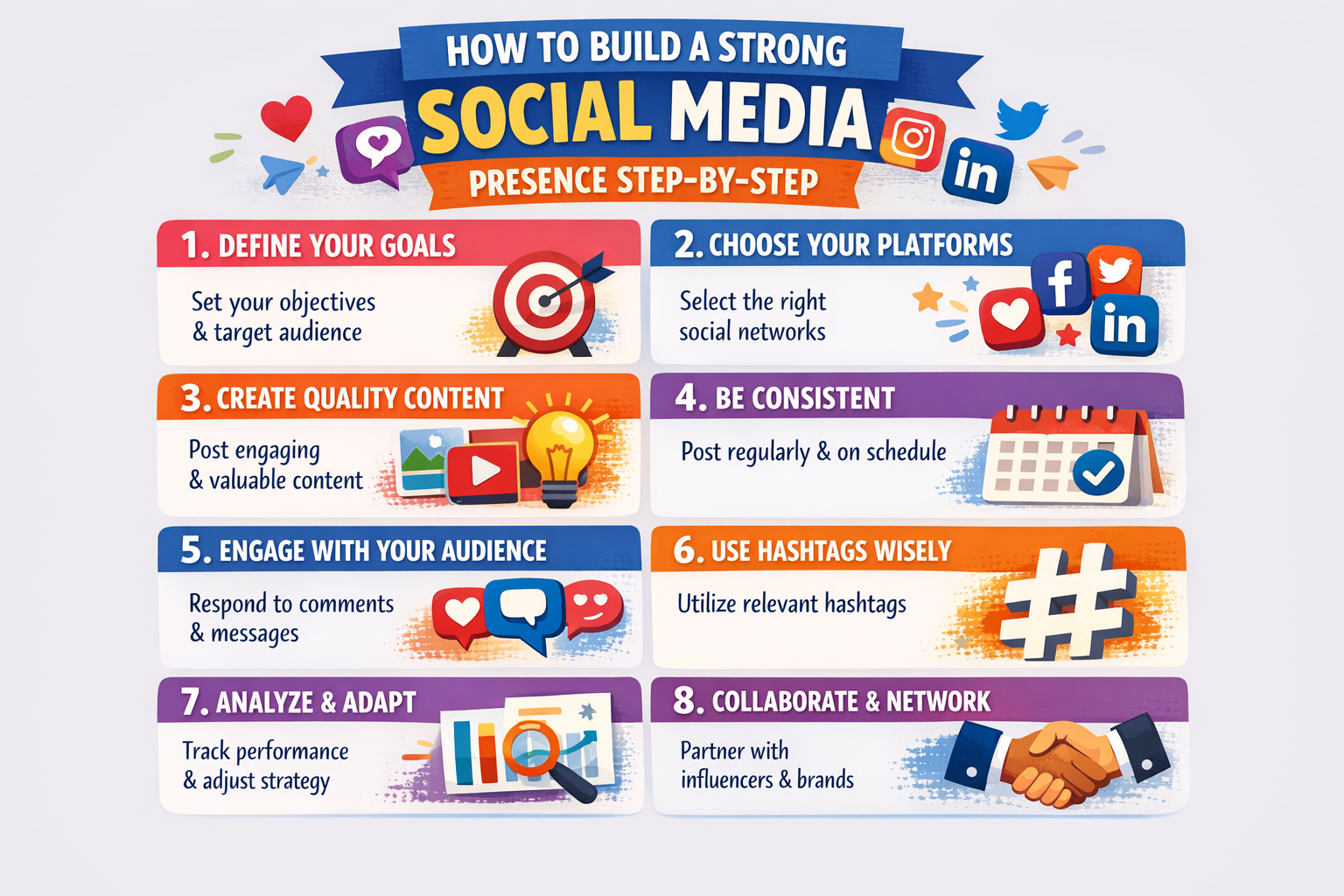
1. Define Your Goals
Before posting, define what you want to achieve. Are you aiming for brand awareness, lead generation, or customer engagement? Clear goals guide your strategy and help measure success.
Tips for Setting Goals
- Use SMART goals (Specific, Measurable, Achievable, Relevant, Time-bound)
- Focus on 2–3 key objectives at first
- Align goals with your overall business strategy
2. Identify Your Target Audience
Knowing your audience is critical for creating content that resonates. Define your ideal followers based on demographics, interests, and online behavior.
How to Identify Your Audience
- Use platform analytics to understand followers
- Research competitors’ audiences
- Create buyer personas
Pro Tip
Engage with your audience through polls, Q&A sessions, or comments to refine your understanding.
3. Choose the Right Platforms
Not every social platform fits your brand. Select platforms where your audience is most active.
Platform Insights
- Instagram → Visual content and reels
- Facebook → Community building and ads
- LinkedIn → Professional branding and B2B networking
- Twitter/X → Real-time updates and trends
4. Create a Content Strategy
Content is the backbone of social media. Plan posts that inform, entertain, and inspire your audience.
Steps to Build a Content Strategy
- Plan content themes (educational, promotional, inspirational)
- Mix formats (images, videos, reels, carousels)
- Maintain a posting schedule
Content Tips
- Use high-quality visuals
- Keep captions engaging
- Include hashtags and keywords naturally
5. Engage Consistently
Consistency is key to growth. Regular posting keeps your audience engaged and signals activity to social media algorithms.
How to Engage
- Reply to comments and messages promptly
- Participate in relevant conversations
- Collaborate with other creators
6. Monitor Analytics and Performance
Tracking results is essential to understand what works and optimize your strategy.
Important Metrics
- Reach and impressions
- Engagement rate (likes, shares, comments)
- Follower growth
- Click-throughs and conversions
Pro Tip
Use tools like Hootsuite, Sprout Social, or native analytics on Instagram, Facebook, and LinkedIn.
7. Optimize and Adjust Your Strategy
Social media trends change quickly. Adjust your content, posting times, and platform focus based on analytics.
Tips to Improve
- Test different types of content
- Experiment with posting schedules
- Learn from top-performing posts
Common Mistakes to Avoid
- Posting irregularly or inconsistently
- Ignoring audience feedback
- Focusing only on promotion, not value
- Neglecting analytics
Social Media Mistakes to Avoid
Be mindful of engagement, value, and analytics to prevent slow growth.
Conclusion
Building a strong social media presence requires planning, consistency, and engagement. By defining goals, understanding your audience, creating quality content, and analyzing performance, you can grow your brand effectively. Platforms like webbsocial.com provide tools, tips, and examples to help businesses and creators succeed in 2026.