
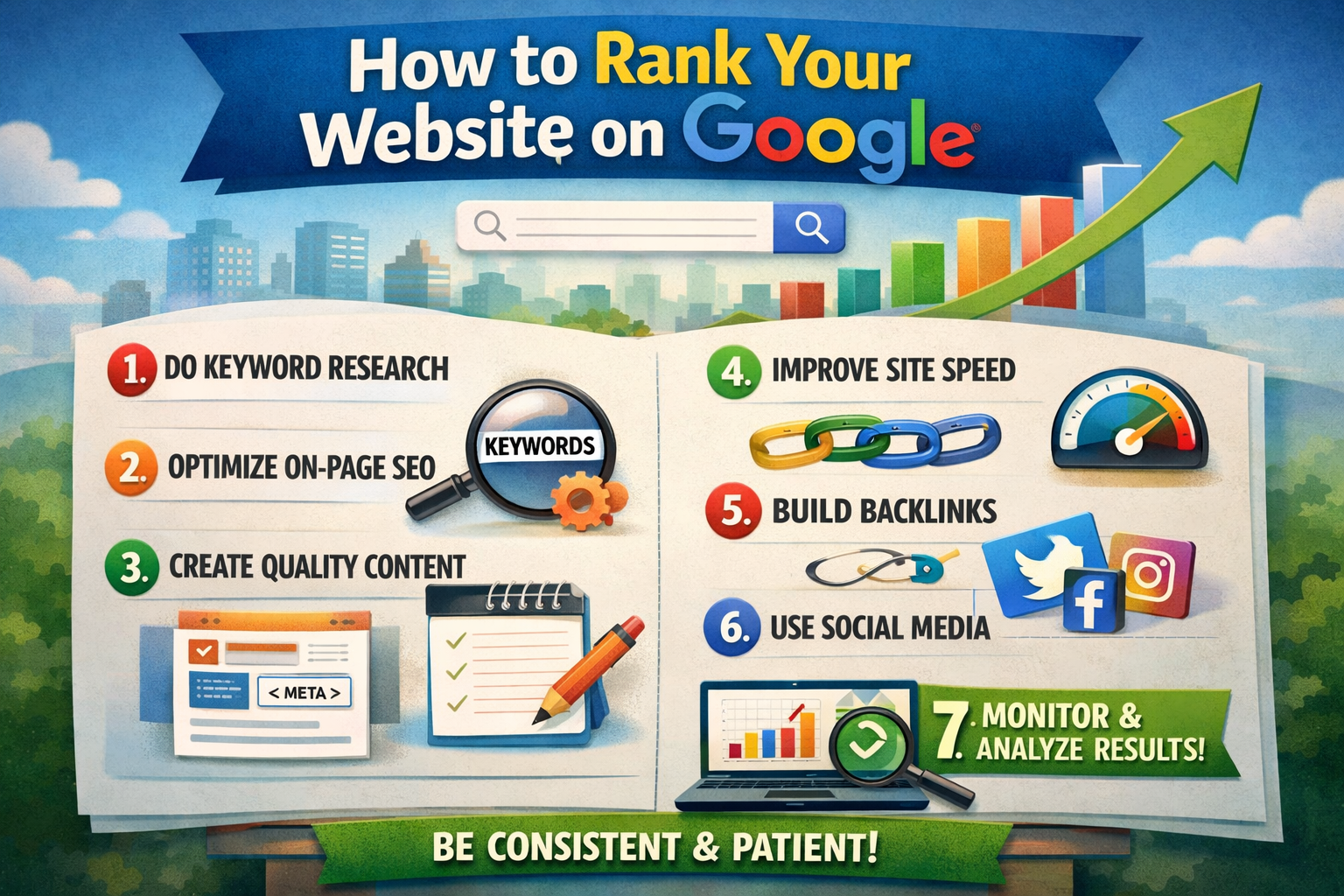
Ranking your website on Google requires a combination of SEO strategy, quality content, and consistent optimization. It’s not a one-time task but an ongoing process. Below are practical steps you can follow to improve your rankings.
Contents
- 1 1. Do Proper Keyword Research
- 2 2. Create High-Quality Content
- 3 3. Optimize On-Page SEO
- 4 4. Improve Website Speed
- 5 5. Make Your Website Mobile-Friendly
- 6 6. Build Quality Backlinks
- 7 7. Use Internal Linking
- 8 8. Optimize Images and Media
- 9 9. Update Content Regularly
- 10 10. Track Performance
- 11 Conclusion
1. Do Proper Keyword Research
Start by finding what your audience is searching for. Use tools like Google Keyword Planner or Ubersuggest to identify keywords with good search volume and low competition. Focus on long-tail keywords as they are easier to rank.
2. Create High-Quality Content
Content is the most important factor for ranking. Write articles that:
- Solve real problems
- Are easy to read
- Provide clear and useful information
Avoid copying content. Unique and valuable content performs better on Google.
3. Optimize On-Page SEO
Make sure every page is properly optimized:
- Use your keyword in the title, headings, and URL
- Write a proper meta description
- Use H1, H2, H3 headings correctly
- Add internal links to other pages on your site
4. Improve Website Speed
A fast website ranks better and keeps users engaged. Optimize images, use caching, and reduce unnecessary code. A slow site increases bounce rate and affects ranking.
5. Make Your Website Mobile-Friendly
Most users browse on mobile devices. Ensure your website is responsive and works smoothly on all screen sizes.
6. Build Quality Backlinks
Backlinks are links from other websites to yours. They signal trust to Google. Focus on:
- Guest posting
- Business directories
- High-quality blog links
Avoid spammy backlinks as they can harm your ranking.
7. Use Internal Linking
Link your pages with each other. This helps Google understand your website structure and improves user navigation.
8. Optimize Images and Media
Use alt text for images and compress files to improve loading speed. This also helps in ranking on Google Images.
9. Update Content Regularly
Keep your content fresh. Update old articles with new information, keywords, and improved structure to maintain rankings.
10. Track Performance
Use tools like Google Analytics and Google Search Console to monitor traffic, keywords, and performance. Analyze data and improve your strategy accordingly.
Conclusion
Ranking on Google takes time and consistency. Focus on quality content, proper SEO, and user experience. With the right approach, your website will gradually improve its position and attract more organic traffic.