
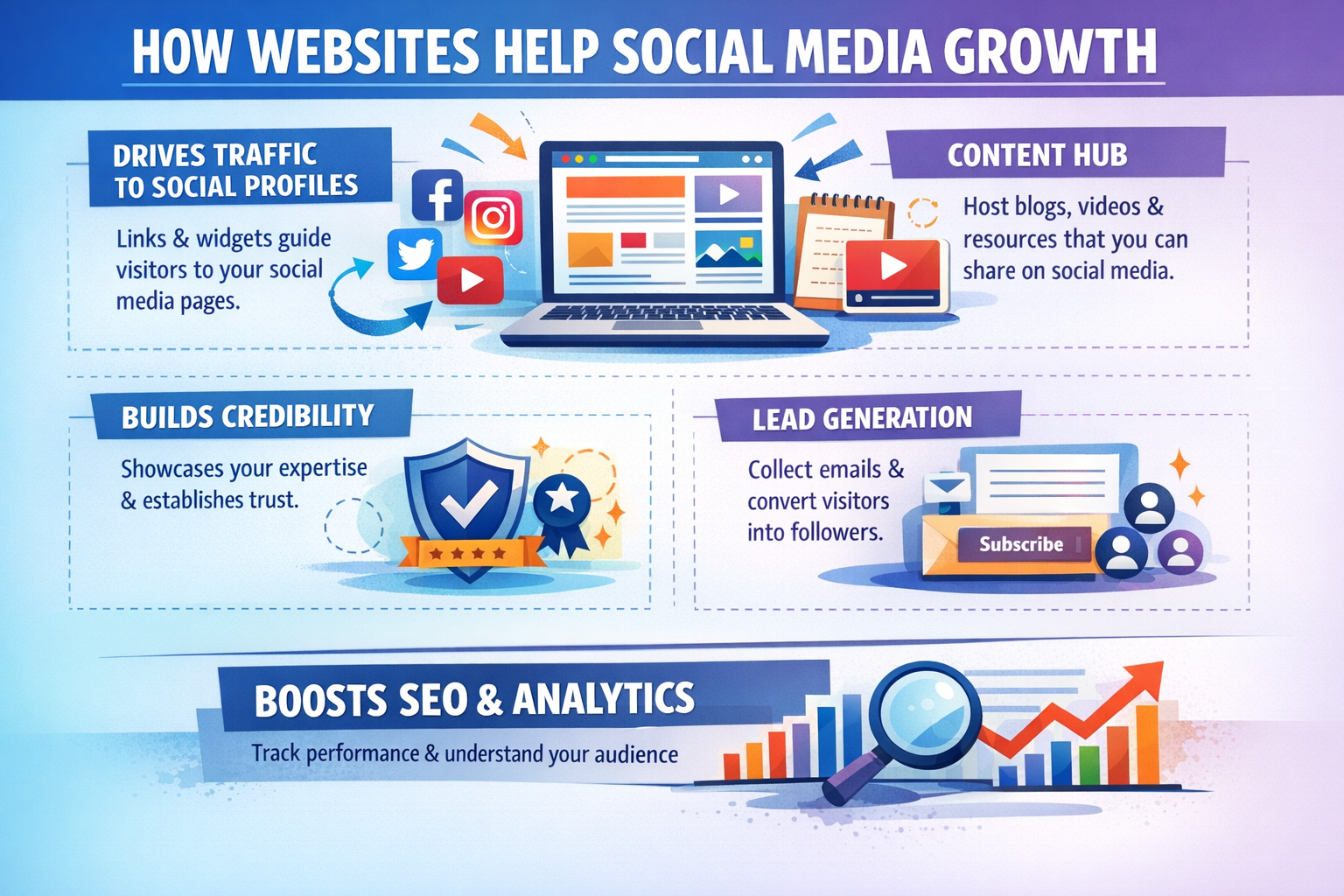
In today’s digital landscape, social media and websites are deeply connected. While social platforms help you reach a wider audience, your website acts as the central hub for your brand. When used together strategically, a website can significantly boost your social media growth and overall online presence.
Contents
The Role of a Website in Social Media Strategy
A website is your owned platform, where you have full control over content, design, and user experience. Social media platforms, on the other hand, are rented spaces where algorithms decide your reach. By linking both, you create a powerful system that drives traffic, engagement, and conversions.
Why Websites Are Important for Social Media Growth
1. Drives Traffic from Social Media
Every post you share on social media can direct users to your website. Whether it’s a blog article, product page, or service information, your website gives users a place to explore more in detail.
This helps:
- Increase website traffic
- Improve engagement
- Generate leads
2. Builds Brand Authority
A professional website makes your business look more credible. When users visit your profile and find a website link, they are more likely to trust your brand.
A strong website:
- Shows professionalism
- Builds trust
- Strengthens your brand image
3. Converts Social Media Visitors into Customers
Social media brings attention, but websites convert that attention into action. Once users land on your website, you can guide them with:
- Clear call-to-action buttons
- Contact forms
- Product pages
This increases your chances of turning followers into paying customers.
4. Supports Content Marketing
Websites allow you to publish detailed content like blogs, guides, and case studies. You can then share this content on social media platforms to attract users.
This strategy helps:
- Increase reach
- Improve engagement
- Provide value to your audience
5. Improves SEO and Visibility
When your website content is shared on social media, it generates traffic and signals that can indirectly improve your search engine rankings.
More visibility leads to:
- Higher organic traffic
- Better brand exposure
- Increased audience growth
6. Collects User Data and Leads
Unlike social media platforms, your website allows you to collect valuable user data through:
- Email sign-ups
- Contact forms
- Newsletter subscriptions
This helps you build a long-term audience beyond social media.
7. Enables Better Retargeting
With tools like tracking pixels, your website allows you to retarget visitors who came from social media. This means you can show ads to users who have already shown interest in your business.
This improves:
- Ad performance
- Conversion rates
- ROI on marketing campaigns
Key Website Features That Boost Social Media Growth
To maximize results, your website should include:
- Social sharing buttons
- Embedded social media feeds
- Easy navigation
- Fast loading speed
- Mobile-friendly design
- Clear call-to-actions
Best Practices to Connect Website and Social Media
- Add your website link to all social profiles
- Share blog posts regularly on social media
- Use landing pages for campaigns
- Encourage users to share your content
- Track performance using analytics tools
Conclusion
A website is a powerful asset that enhances your social media growth. It helps drive traffic, build trust, generate leads, and convert visitors into customers. Businesses that integrate their website with social media effectively can achieve faster and more sustainable growth.