
Contents
- 1 Ways to Monetize Your Website Traffic
- 2 Introduction
- 2.1 Why Website Monetization is Important
- 2.2 Display Advertising
- 2.3 Affiliate Marketing
- 2.4 Selling Digital Products
- 2.5 Offering Services
- 2.6 Sponsored Content
- 2.7 Membership and Subscription Model
- 2.8 Selling Physical Products
- 2.9 Email Marketing Monetization
- 2.10 Online Courses and Coaching
- 2.11 Best Approach to Monetization
- 2.12 Common Mistakes to Avoid
- 2.13 Conclusion
Ways to Monetize Your Website Traffic
Introduction
Website traffic is valuable, but it only matters when it makes money. By 2026, just getting visitors won’t be enough. The real achievement is turning that traffic into revenue with the right strategies. Whether you run a blog, business site, or niche platform, effective monetization can transform your audience into a reliable income source.
Why Website Monetization is Important
If your website gets traffic but doesn’t make money, you are missing a big opportunity. Monetization can help you build passive income, grow your business, and get the most from your audience. A well-optimized website can become a lasting digital asset.
Display Advertising
How It Works
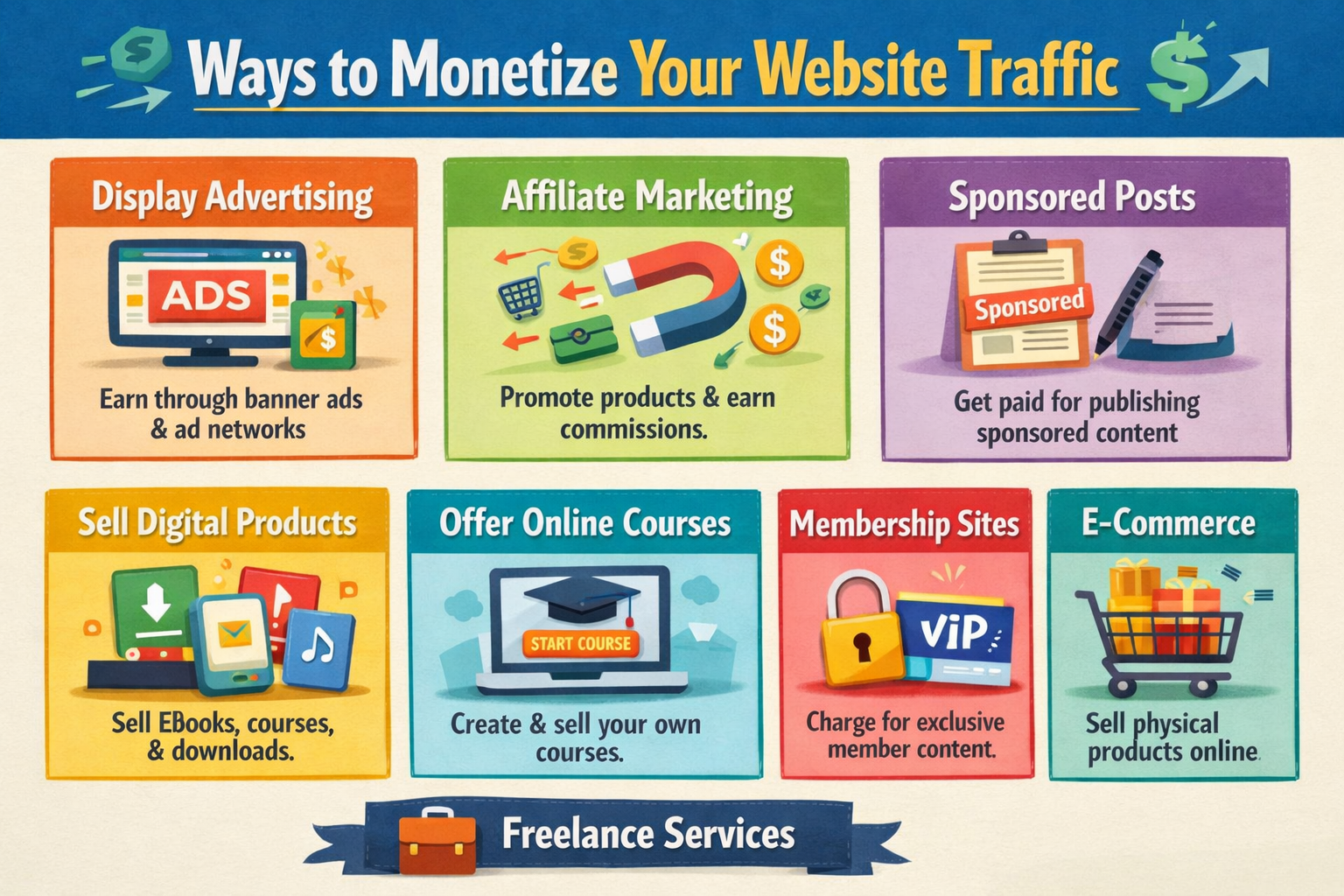
Display advertising lets you earn money by showing ads on your website. Platforms like Google AdSense pay you based on clicks and views.
Benefits
This method is easy to set up and works well for sites with high traffic. It requires little effort once it’s in place.
Affiliate Marketing
How It Works
Affiliate marketing is about promoting products or services and earning a commission for every sale made through your referral link.
Best Use Case
It works best when you produce valuable content like product reviews, comparisons, or guides that help users make decisions.
Selling Digital Products
What You Can Sell
You can create and sell digital products like eBooks, courses, and templates directly from your website.
Why It’s Profitable
You avoid inventory or shipping costs, which makes profit margins higher compared to selling physical products.
Offering Services
Types of Services
You can use your website to offer services such as web design, SEO, content writing, or consulting.
Business Advantage
This method allows you to earn direct income from clients instead of relying only on traffic-based earnings.
Sponsored Content
How It Works
Brands might pay you to publish content that promotes their products or services.
Income Potential
Sponsored posts can bring in good revenue if your website has strong traffic and authority.
Membership and Subscription Model
What You Offer
You can provide exclusive content like premium articles, courses, or private communities.
Revenue Model
Users pay a recurring fee, creating a stable and predictable income stream.
Selling Physical Products
E-commerce Setup
You can sell physical products directly through your website by setting up an online store.
Growth Opportunity
This allows you to expand your business and create a brand around your products.
Email Marketing Monetization
How It Works
Collect user emails and promote products, services, or affiliate offers through email campaigns.
Long-Term Benefit
Email marketing helps you build a loyal audience and generate repeat income.
Online Courses and Coaching
Monetization Method
Create courses or offer coaching sessions based on your expertise.
Authority Building
This not only makes money but also establishes you as an expert in your field.
Best Approach to Monetization
Combine Multiple Methods
Using a mix of monetization strategies is more effective than relying on just one. For example, combining ads, affiliate marketing, and digital products can create many income streams.
Common Mistakes to Avoid
What to Avoid
Avoid crowding your website with ads, promoting low-quality products, or neglecting user experience. These mistakes can undermine trust and engagement.
Conclusion
Monetizing your website traffic is crucial for long-term success. By using the right strategies and focusing on user value, you can turn your visitors into a reliable income source. Consistency and smart planning are essential for achieving sustainable growth.