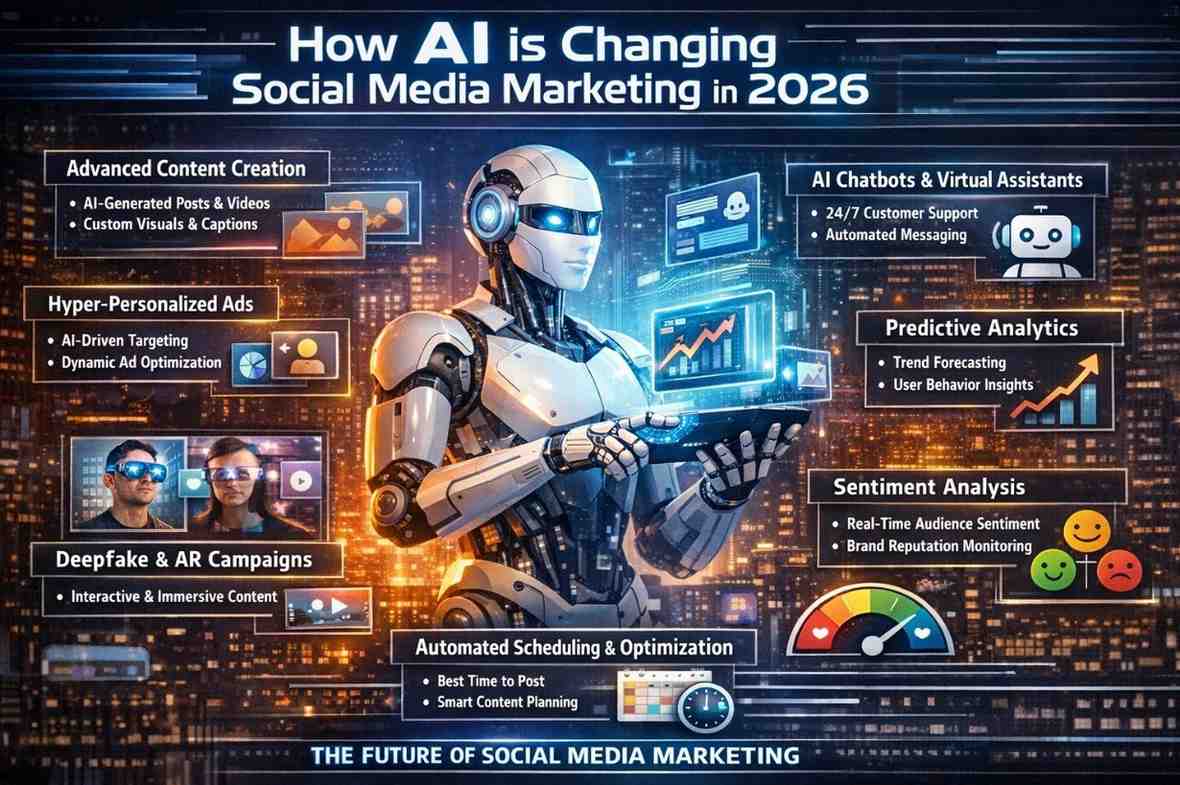
Today, Artificial Intelligence (AI) has transformed from a futuristic concept into an integral part of social media marketing in 2026. With AI, businesses can now operate more efficiently and effectively. Companies that use AI tools in their social media marketing activities have been observed to outperform competitors.
Not only has AI transformed how marketers work, but it has also transformed what marketers can accomplish in social media marketing strategies.
Contents
AI-Enhanced Content Creation
Content has been, and will continue to be, the king in social media marketing. With AI, marketers no longer have to rely only on their creative team to come up with innovative content. With AI, marketers can now generate text, images, and videos.
Personalized Messaging for Maximum Impact
With AI, marketers can now personalize their messages, thus increasing their reach and engagement. AI has been observed to study users’ behavior and preferences, thus enabling marketers to come up with highly personalized messages.
Example: Spotify uses AI to personalize playlist suggestions, thus increasing user engagement—social media brands can use AI in a similar manner.
Automated Visual Content
Visual content has been observed to perform better than text-based content. With AI, marketers can now generate graphics, infographics, and videos using tools such as Canva AI or Lumen5.
Tip: Use AI tools to generate several variations of posts and observe which visuals work best with various audience groups.
AI-Generated Ideas and Trend Insights
With AI, one can obtain ideas on what to share with your audience, ensuring your content resonates with them and remains relevant.
Example: Trend analysis through AI can predict what content might go viral, such as upcoming viral challenges, hashtags, and trending topics.
Smarter Audience Targeting
It is important to target your audience, and AI does this through precise audience targeting and engagement.
Predictive Analytics for Campaign Performance
AI uses predictive analytics to study past audience engagement, ensuring marketers create content likely to perform well, thus avoiding failures and disappointments.
Example: AI can help marketers determine what type and style of content to share with a particular demographic.
Advanced Segmentation and Personalization
AI allows for detailed audience segmentation, considering audience interests, behavior, and engagement, not just demographics, ensuring your audience gets content relevant to them.
Example: A clothing brand can use AI to send personalized messages to different age groups or geographical locations, maximizing its potential.
Optimized Posting Schedules
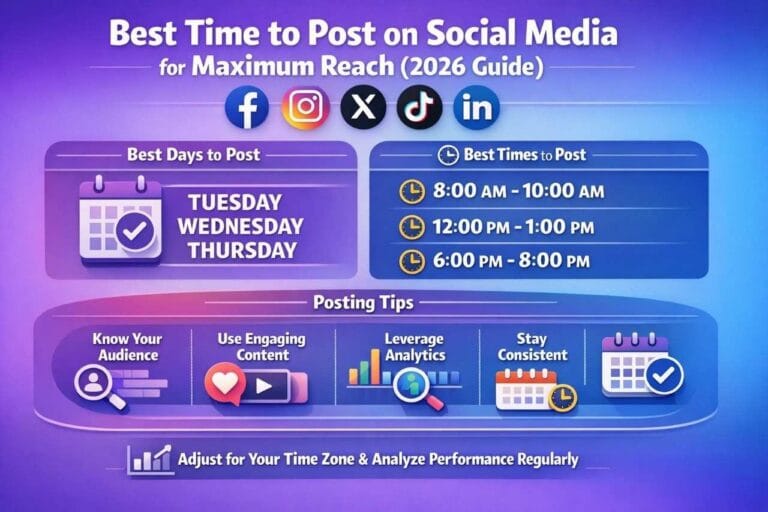
AI helps marketers schedule posts when they are likely to reach a large audience, considering audience engagement and algorithmic behavior, ensuring maximum audience engagement and activity.
Tip: Utilize AI tools to schedule posts during optimal times, even if your audience is distributed worldwide.
Enhanced Social Media Advertising
Social media advertising has transformed through AI, and AI has ensured advertising has never been more efficient, personalized, and profitable.
Programmatic Advertising for Efficiency
Programmatic advertising is the use of AI to automate the buying and placement of ads. The use of AI helps to optimize the placement of the ads, and the budget is allocated in the most efficient way to ensure the highest possible return on investment.
Example: Facebook Ads uses an AI system that optimizes the ad spend in real-time, stopping the ad and moving the budget to the ad that is performing well.
Dynamic Ad Content
The use of AI helps to optimize the ad content in real-time, and the marketer is able to reach the customer with the most relevant message. The marketer is able to personalize the ad and ensure that the customer is exposed to the product they are most interested in.
Example: An online store can use the product the customer viewed most to personalize the ad and increase the chances of conversion.
Optimized Ad Budget Management
The use of AI helps the marketer optimize the budget allocation to the ad and the platform that is giving the highest return on investment. The marketer is able to optimize the budget and ensure that the ad is reaching the customer in the most efficient way.
Example: Google Ads uses an AI system that optimizes the ad budget and allocates the budget to the ad that is giving the highest conversion rate.
AI-Driven Analytics and Reporting
Tracking the performance of the social media campaign is now easier, and the marketer is able to make the most informed decisions using the insights generated by the AI system.
Real-Time Insights
The marketer is able to track the performance of the social media campaign using the insights generated by the AI system. The marketer is able to track the engagement, clicks, and conversions, and make the most informed decisions.
Example: The marketer is able to use the insights generated by the Hootsuite Insights and Sprout Social tools, which use an AI system to generate the insights.
Predictive Performance Metrics
The marketer is able to use the insights generated by the AI system to make the most informed decisions. The marketer is able to track the performance and make the most informed decisions.
Example: The marketer is able to use the insights generated by the AI system to make the most informed decisions, and if the engagement is expected to drop, the marketer is able to make the necessary adjustments.
Sentiment Analysis and Brand Monitoring
It tracks social mentions and analyzes the sentiment behind them, whether positive, negative, or neutral.
Tip: Consider using AI sentiment analysis while planning your campaigns to keep an eye on the social sentiment and make appropriate changes.
The Future of AI in Social Media Marketing
The use and application of AI in social media marketing are expected to increase in 2026 and beyond. We can expect to witness the emergence of an AI system that can create content, predict the next big thing in social media, and offer an extremely personalized social media experience. Those brands that have adopted AI earlier will have an upper hand over their competitors.
The gap between creativity and analytics is bridged by AI, and the future is expected to be much faster, intelligent, and efficient in making marketing decisions.
Conclusion
In 2026, the social media marketing scenario is being changed by the application and use of AI. The application and use of AI are changing the way content is created, the way audiences are targeted, the way social media is advertised, and the way social media is analyzed. The future of social media marketing is expected to be driven by AI, and the brands that have adopted AI are expected to be ahead in the game.
About the Author