Contents
Introduction
In 2026, social media is more competitive than ever, with millions of posts going live every minute across platforms. No matter how great your content is, posting at the wrong time can significantly reduce its visibility and engagement. That’s why understanding the best time to post on social media has become a crucial part of any successful digital strategy.
As algorithms continue to evolve, platforms now prioritize timely, relevant, and engaging content. This means your posts need to reach your audience when they are most active and ready to interact. Whether you’re a business owner, content creator, or marketer, timing can directly impact your reach, likes, shares, and overall growth.
In this 2026 guide, we’ll explore the latest data-driven insights, platform-specific best posting times, and smart strategies to help you maximize your social media performance.
Why Timing Matters in Social Media
Timing plays a crucial role in the success of your social media strategy. No matter how high-quality or engaging your content is, posting it at the wrong time can limit its visibility and reduce overall engagement. Social media platforms are driven by algorithms that prioritize fresh and relevant content, which means posts shared when your audience is most active are more likely to appear at the top of their feeds.
When you post at the right time, your content gets immediate attention in the form of likes, comments, and shares. This early engagement signals to the platform that your post is valuable, increasing its chances of being shown to a wider audience. On the other hand, posting during low-activity hours can cause your content to get buried under newer posts before your audience even sees it.
Audience behavior is another important factor. Different users have different routines—some scroll through social media during morning commutes, while others are more active in the evening after work or late at night. Understanding these patterns helps you align your posting schedule with your audience’s habits, leading to better reach and interaction.
Timing also varies across platforms. For example, professional audiences on LinkedIn may be more active during work hours, while Instagram and Facebook users often engage more during leisure time. Without the right timing strategy, even the best content may fail to perform as expected.
In short, timing matters because it directly influences visibility, engagement, and growth. By posting when your audience is most active, you increase the chances of your content being seen, interacted with, and shared—ultimately helping you achieve better results from your social media efforts.
Benefits of Posting at the Right Time
- Higher engagement rates
- Increased website traffic
- Better reach for promotions and campaigns
- Improved ROI on ads
Best Time to Post on Different Social Media Platforms
1. Facebook
- Optimal Days: Wednesday, Thursday, Friday
- Best Times: 11 AM – 2 PM
Why It Works
People often check Facebook during lunch breaks and mid-week work hours.
2. Instagram
- Optimal Days: Tuesday, Wednesday, Thursday
- Best Times: 10 AM – 1 PM, 7 PM – 9 PM
Tips
Use Instagram Insights to track when your followers are online for precise timing.
3.Twitter/X
- Optimal Days: Tuesday, Wednesday
- Best Times: 9 AM – 11 AM
Tips
Twitter is fast-moving; posting during morning hours increases visibility for trending topics.
4. LinkedIn
- Optimal Days: Tuesday, Wednesday, Thursday
- Best Times: 8 AM – 10 AM, 12 PM – 1 PM
Tips
LinkedIn is more active during work hours, so B2B posts perform better mid-morning or lunchtime.
5. TikTok
- Optimal Days: Tuesday, Thursday, Friday
- Best Times: 6 AM – 10 AM, 7 PM – 11 PM
Tips
TikTok engagement spikes in early morning and evening when users scroll for entertainment.
General Guidelines for Posting on Social Media
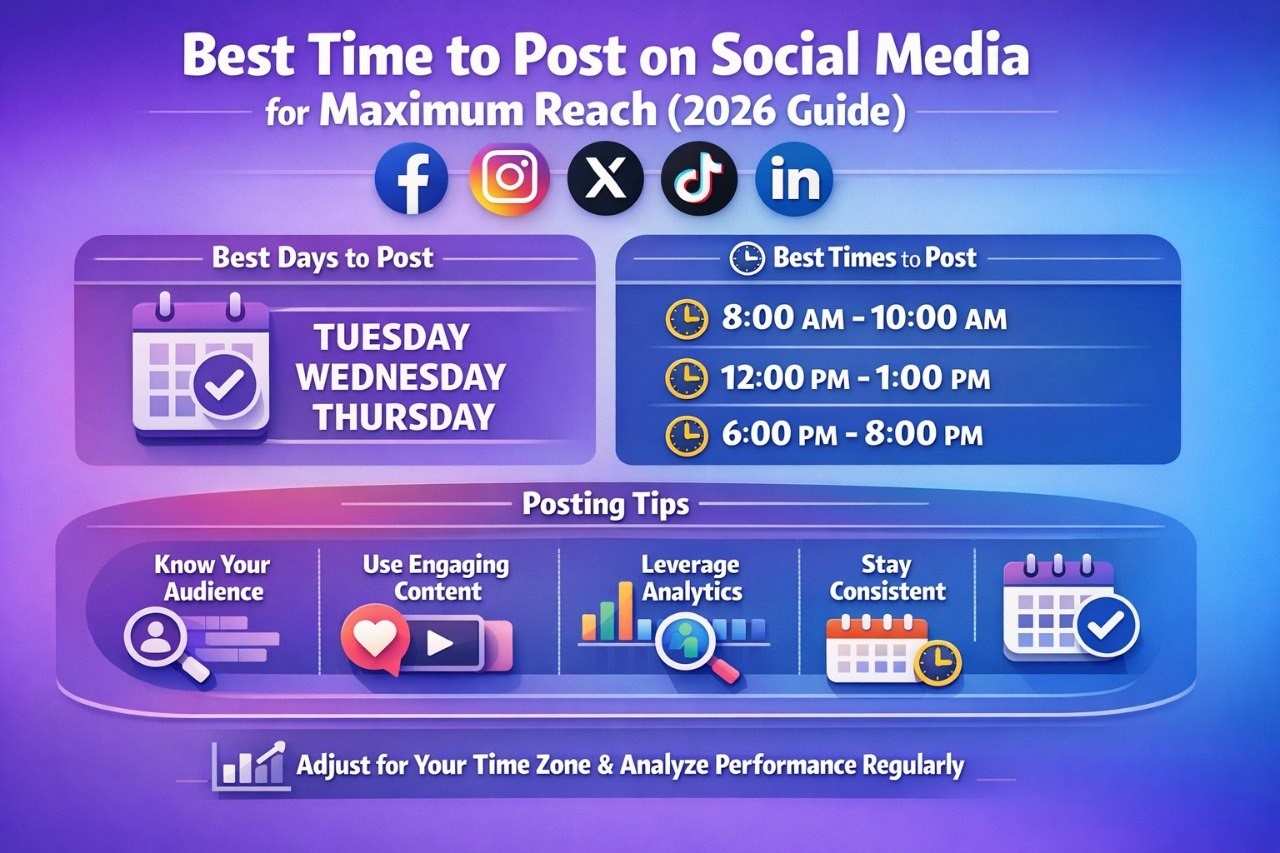
1. Know Your Audience
Analyze your target audience’s habits to identify peak activity times.
2. Use Analytics Tools
Tools like Facebook Insights, Instagram Insights, and Sprout Social help determine the best posting times.
3. Test and Adjust
Every account is unique. Monitor engagement metrics and tweak posting schedules for maximum reach.
4. Don’t Overlook Time Zones
If your audience is global, consider multiple posting times to reach users in different regions.
Common Mistakes to Avoid
- Posting randomly without tracking engagement
- Ignoring analytics and insights
- Focusing only on peak hours without considering audience type
- Posting too frequently or too sparsely
Conclusion
Timing is a crucial factor for social media success in 2026. By understanding your audience, tracking analytics, and testing different posting schedules, you can maximize engagement, reach, and conversions. Combine the right timing with quality content, and your social media strategy will thrive.
About the Author