Contents
- 1 Introduction
- 2 What is Blog SEO?
- 3 1. Perform Keyword Research
- 4 2. Optimize Your Blog Title
- 5 3. Use Proper Heading Structure
- 6 4. Write High-Quality Content
- 7 5. Optimize URL Structure
- 8 6. Add Internal and External Links
- 9 7. Optimize Meta Tags
- 10 8. Optimize Images
- 11 9. Improve Page Speed
- 12 10. Make Your Blog Mobile-Friendly
- 13 11. Update Content Regularly
- 14 12. Track SEO Performance
- 15 Conclusion
- 16 Key Takeaways
- 17 About the Author
Introduction
While creating a blog post is not enough, you must also optimize your blog post to rank higher on Google search results. This is where the concept of SEO optimization helps your blog content reach the right audience.
In the following paragraphs, we will discuss the complete guide on optimizing your blog post.
What is Blog SEO?
Blog SEO is the process of optimizing your blog content to rank higher on search engine results.
Key Elements of Blog SEO
- Keyword optimization
- Content quality
- On-page SEO
- Technical optimization
Why It Matters
Your blog will be discovered by the right people who are searching for the right information.
1. Perform Keyword Research
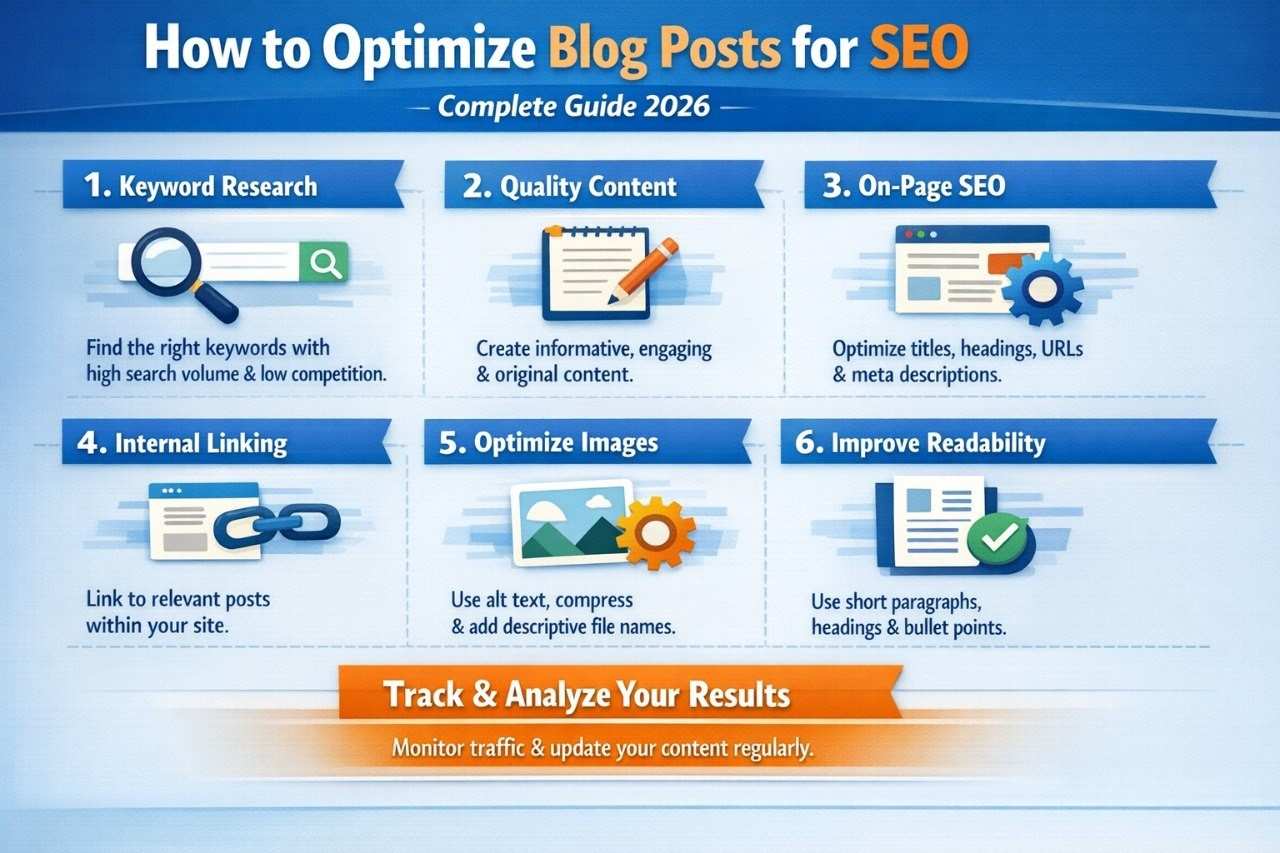
Keyword research is the fundamental part of the entire process.
How to Find Keywords
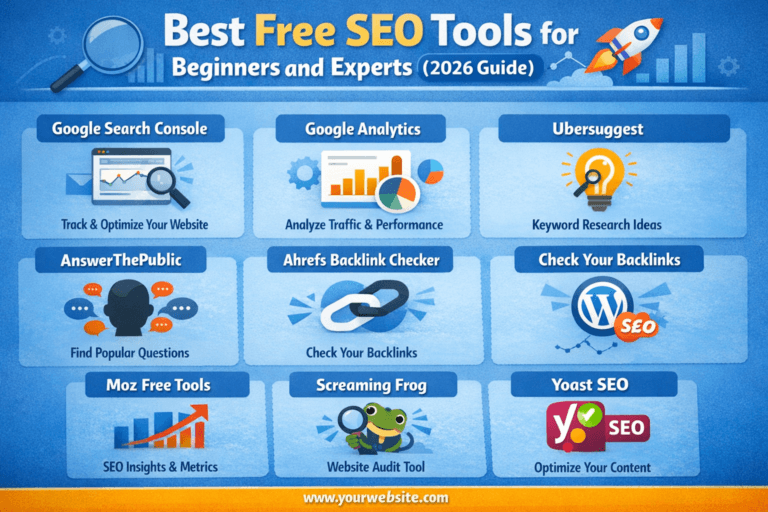
- Use tools like Ubersuggest
- Use long-tail keywords
- Analyze the search intent
Pro Tip
Use keywords with high search volume and low competition.
2. Optimize Your Blog Title
The title is the first thing that your reader will see.
Best Practices
- Include your keyword
- Keep the title short, i.e., less than 60 characters
- Make the title interesting
3. Use Proper Heading Structure
Headings make your blog easier to read.
Structure to Follow
Use H1 for the title
Use H2 for the main section
Use H3 to H6 for subheadings
4. Write High-Quality Content
High-quality content is the most important factor.
What Makes Content Effective
- Solves real problems
- Easy to read
- Provides value
Content Tip
Content should be easy to read. It should be in short paragraphs.
5. Optimize URL Structure
Optimizing the URL structure can help in SEO.
Best Practices
The URL should be short. It should include the keyword. It should not include unnecessary words.
6. Add Internal and External Links
Adding links can help in SEO and can make the blog easier to read.
Internal Linking
Internal linking can be used to link other related blog posts.
External Linking
The external links should be from high authority sites.
7. Optimize Meta Tags
Optimizing meta tags can help in click-through rate.
Meta Title Tips
The title should include the keyword. It should not be more than 60 characters.
Meta Description Tips
The description should not be more than 160 characters. It should be engaging.
8. Optimize Images
Optimizing images can help in engagement and SEO.
Best Practices
The image should include alt text. It should be compressed. It should have proper file names.
Tool Example
The tool used for optimizing images can be TinyPNG.
9. Improve Page Speed
Page speed can affect rankings and can provide a better user experience.
How to Improve Speed
The speed can be improved by optimizing images. It can be improved by caching. It can be improved by minifying the code.
10. Make Your Blog Mobile-Friendly
Most users access blogs from mobile devices.
Tips
The design should be responsive. The design should be fast. The design should be simple.
11. Update Content Regularly
The content should be updated regularly to perform better.
How to Update
The content should include new information. The keywords should be improved. The content should be updated to remove old information.
12. Track SEO Performance
The performance can be tracked to improve the results.
Tools to Use
The tools to track performance can be Google Analytics. The tools to track performance can be Google Search Console.
What to Track
The traffic can be tracked. The rankings can be tracked. The behavior can be tracked.
Conclusion
Optimizing blog posts for SEO is essential for long-term success.
Key Takeaways
Using appropriate SEO techniques
Consistency
With an appropriate SEO strategy, you can improve your blog’s position on Google, thereby attracting more organic traffic.
About the Author