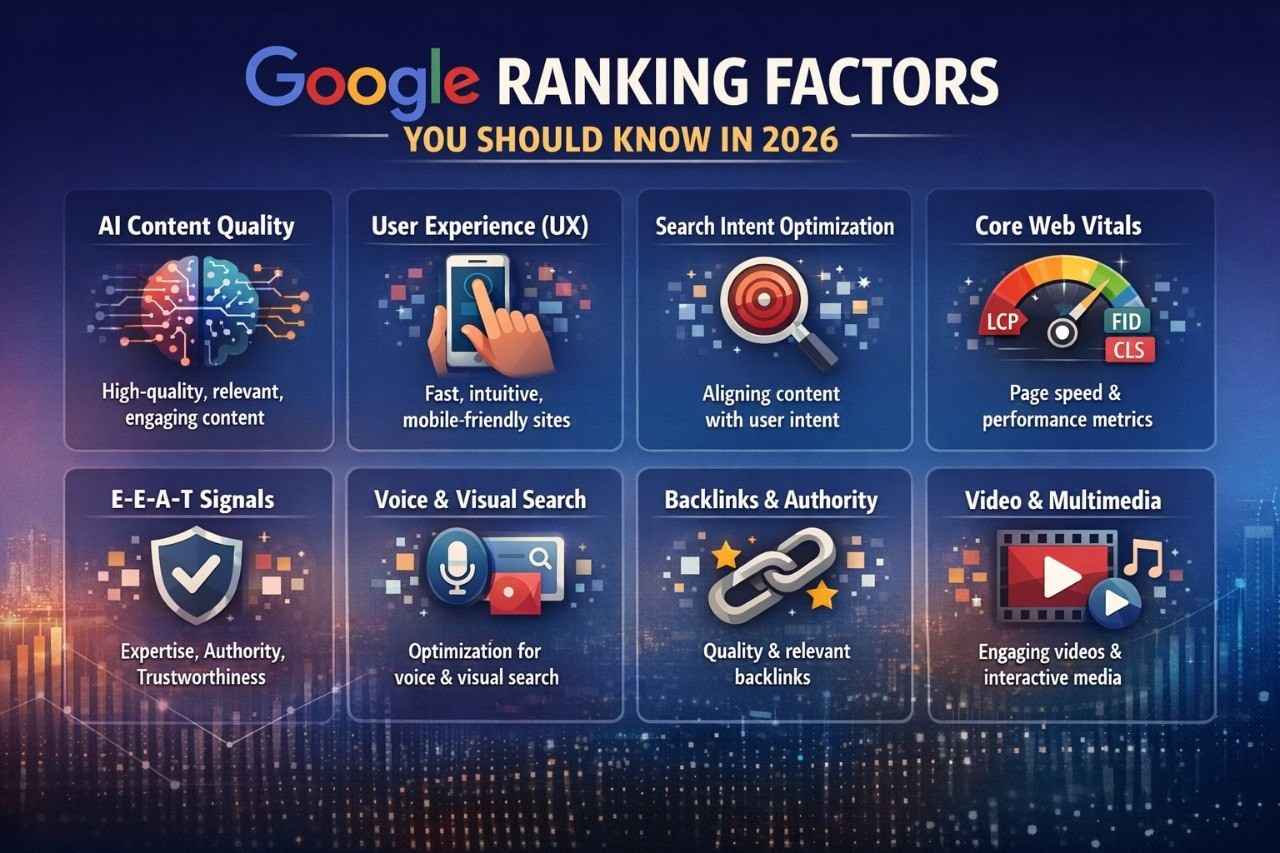
Ranking on Google in 2026 is more competitive than ever before. With rapid advancements in AI, smarter algorithms, and evolving user expectations, only well-optimized websites can achieve top rankings. If you want consistent traffic and better visibility, understanding Google ranking factors is essential.
Contents
- 1 What Are Google Ranking Factors?
- 2 1. High-Quality Content
- 3 2. Search Intent Optimization
- 4 3. Core Web Vitals & Page Experience
- 5 4. Mobile-First Indexing
- 6 5. Backlinks (Off-Page SEO)
- 7 6. On-Page SEO Optimization
- 8 7. AI & Search Algorithms
- 9 8. E-E-A-T (Experience, Expertise, Authority, Trust)
- 10 9. Technical SEO
- 11 10. User Experience (UX)
- 12 11. Voice Search Optimization
- 13 12. Local SEO
- 14 13. Content Freshness
- 15 14. Featured Snippets & Zero-Click Searches
- 16 Conclusion
- 17 About the Author
What Are Google Ranking Factors?
Google ranking factors are the signals and criteria used by search engines to evaluate and rank web pages in search results. These factors help Google determine which content is most relevant, useful, and trustworthy for users.
Why Ranking Factors Matter
- They improve your website’s visibility
- They help drive organic traffic
- They enhance user experience
- They increase conversions and revenue
1. High-Quality Content
Content continues to be the backbone of SEO. In 2026, Google strongly prioritizes content that delivers value to users.
What Makes Content High-Quality?
Content should:
- Solve user problems
- Be original and unique
- Provide accurate and updated information
- Cover topics in depth
Content Length and Structure
Long-form content (800–1500+ words) tends to perform better when it is properly structured using headings, short paragraphs, and lists.
Pro Tip
Always write for humans first, then optimize for search engines.
2. Search Intent Optimization
Understanding user intent is critical for ranking success.
Types of Search Intent
- Informational (learning something)
- Navigational (finding a website)
- Transactional (ready to buy)
- Commercial (comparing options)
How to Optimize for Intent
Analyze top-ranking pages and align your content with what users expect when searching a keyword.
3. Core Web Vitals & Page Experience
User experience plays a major role in rankings.
Key Core Web Vitals Metrics
- Largest Contentful Paint (LCP)
- First Input Delay (FID)
- Cumulative Layout Shift (CLS)
How to Improve Page Experience
- Optimize images
- Use fast and reliable hosting
- Enable caching and compression
4. Mobile-First Indexing
Google now primarily uses the mobile version of your site for indexing and ranking.
Best Practices for Mobile SEO
- Use responsive design
- Improve mobile loading speed
- Avoid intrusive pop-ups
5. Backlinks (Off-Page SEO)
Backlinks remain one of the strongest ranking signals.
Why Backlinks Matter
They act as votes of trust from other websites, showing Google that your content is credible.
Quality Over Quantity
Focus on getting backlinks from:
- High-authority websites
- Relevant niches
- Trusted sources
Link Building Strategies
- Guest posting
- Outreach campaigns
- Broken link building
6. On-Page SEO Optimization
On-page SEO helps search engines understand your content better.
Key Elements
- Title tags
- Meta descriptions
- Header tags (H1–H6)
- Internal linking
Keyword Placement
Use keywords naturally in headings, URLs, and throughout your content without overstuffing.
7. AI & Search Algorithms
AI is transforming how Google understands content and user queries.
How AI Impacts SEO
Google’s AI systems analyze context, intent, and relevance more accurately than ever.
Optimization Tips
- Write clear, natural content
- Answer questions directly
- Use structured data
8. E-E-A-T (Experience, Expertise, Authority, Trust)
Google evaluates the credibility of your content using E-E-A-T principles.
Why E-E-A-T Matters
It ensures that users receive accurate and reliable information.
How to Improve E-E-A-T
- Show author credentials
- Use trusted sources
- Maintain transparency
9. Technical SEO
Technical SEO ensures that your website is easy for search engines to crawl and index.
Key Technical Factors
- Website speed
- XML sitemap
- Robots.txt file
- HTTPS security
Common Issues to Fix
- Broken links
- Duplicate content
- Crawl errors
10. User Experience (UX)
User experience directly impacts engagement and rankings.
UX Optimization Tips
- Easy navigation
- Clean and modern design
- Fast-loading pages
Why UX Matters
Better UX leads to lower bounce rates and higher user satisfaction.
11. Voice Search Optimization
Voice search is growing rapidly with smart devices and assistants.
How to Optimize for Voice Search
- Use conversational keywords
- Answer questions clearly
- Focus on long-tail keywords
12. Local SEO
Local SEO is crucial for businesses targeting specific geographic areas.
Key Local SEO Factors
- Google Business Profile
- Local keywords
- Customer reviews
Optimization Tips
Keep your business information accurate and encourage positive reviews.
13. Content Freshness
Regularly updating your content helps maintain rankings.
Best Practices
- Update old blog posts
- Add new information
- Refresh statistics and examples
Why It Matters
Fresh content signals relevance to Google and improves user trust.
14. Featured Snippets & Zero-Click Searches
Featured snippets appear at the top of search results and provide quick answers.
How to Rank for Featured Snippets
- Use clear headings
- Provide concise answers
- Use lists and tables
Benefit
Ranking in snippets increases visibility and authority.
Conclusion
In 2026, Google ranking factors are more advanced and focused on user experience, relevance, and trust. To succeed, you need to focus on high-quality content, technical optimization, mobile usability, and authority building.
Final Tip
SEO is an ongoing process. Keep updating your strategy, monitor performance, and stay aligned with Google’s latest updates to maintain and improve your rankings over time.
About the Author