In today’s digital landscape, social media and websites are deeply connected. While platforms like Instagram and Facebook help you reach a wider audience, your website acts as the central hub of your brand.
When used together strategically, a website can significantly boost your social media growth, improve engagement, and increase conversions. Businesses that combine both channels effectively build a stronger and more sustainable online presence.
Contents
- 1 The Role of a Website in Social Media Strategy
- 2 Why Websites Are Important for Social Media Growth
- 3 Key Website Features That Boost Social Media Growth
- 4 Best Practices to Connect Website and Social Media
- 5 Advanced Strategies for Faster Growth
- 6 Common Mistakes to Avoid
- 7 Conclusion
- 8 About the Author
The Role of a Website in Social Media Strategy
A website is your owned platform, where you have full control over content, design, and user experience. Social media platforms are rented spaces, where algorithms decide your reach and visibility.
Why This Matters
- Social media reach can fluctuate
- Website traffic is more stable and controllable
- You own your data and audience
Key Insight
By connecting your website with social media, you create a powerful system that drives traffic, builds trust, and increases conversions.
Why Websites Are Important for Social Media Growth
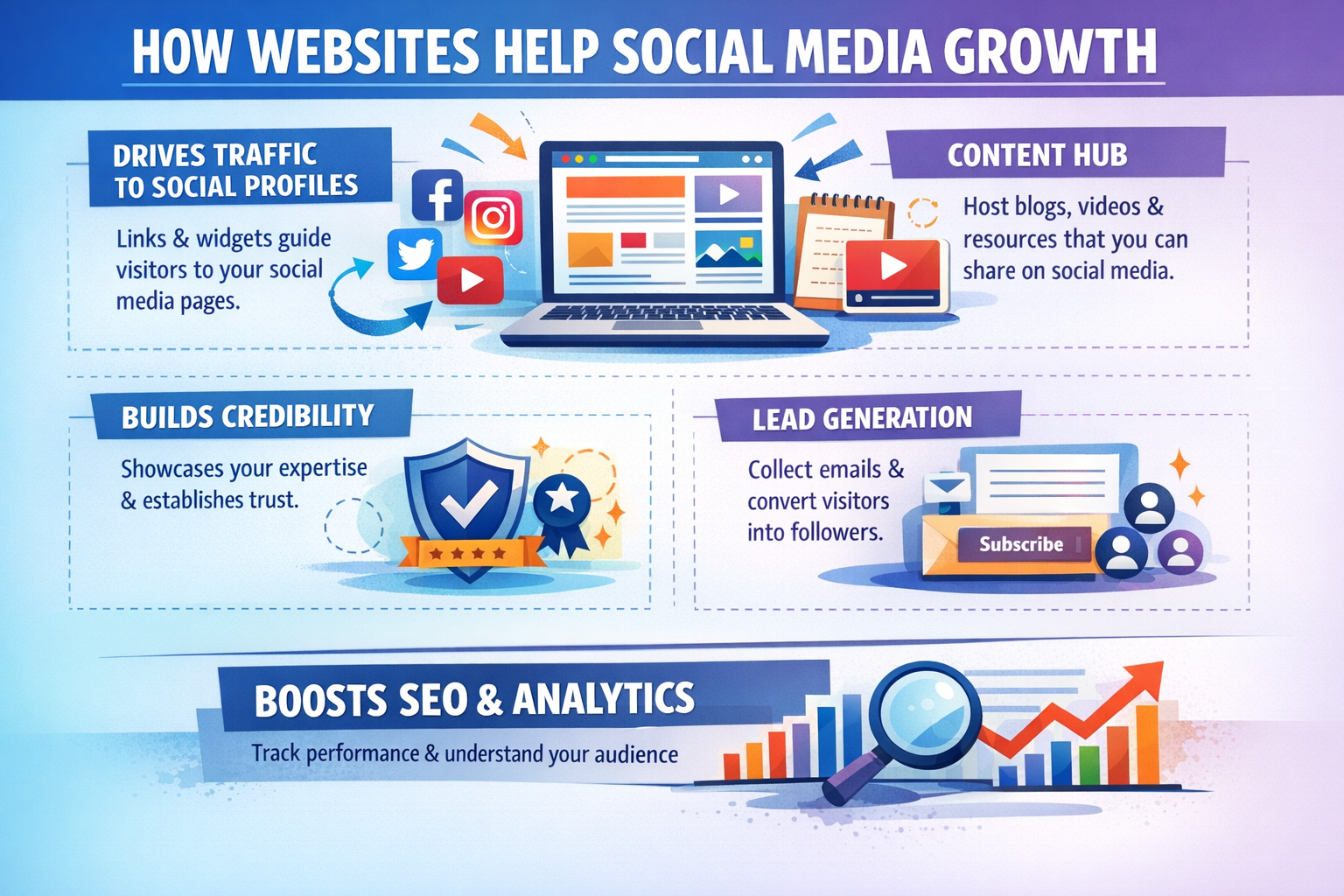
1. Drives Traffic from Social Media
Every social media post can act as a gateway to your website.
How It Helps
- Directs users to blog posts or landing pages
- Encourages deeper exploration
- Increases session duration
Results
- Higher website traffic
- Better engagement
- More lead generation
2. Builds Brand Authority
A professional website makes your business look credible and trustworthy.
What a Strong Website Shows
- Professional design
- Clear messaging
- Organized content
Impact
Users are more likely to trust your brand when they see a well-structured website linked to your social profiles.
3. Converts Social Media Visitors into Customers
Social media grabs attention, but your website converts that attention into action.
Conversion Elements
- Clear call-to-action buttons
- Contact forms
- Product/service pages
Outcome
Turns followers into leads and paying customers.
4. Supports Content Marketing
Websites allow you to publish detailed, valuable content.
- Blog articles
- Guides and tutorials
- Case studies
Strategy
Share this content on social media to drive traffic back to your website.
Benefit
- Increases reach
- Builds authority
- Provides real value to users
5. Improves SEO and Visibility
Search engines like Google prioritize websites with consistent traffic and quality content.
How Social Media Helps SEO
- Drives traffic to your website
- Increases content visibility
- Generates backlinks and shares
Result
- Higher rankings
- More organic traffic
- Better brand exposure
6. Collects User Data and Leads
Unlike social platforms, your website allows direct data collection.
Methods to Collect Data
- Email sign-ups
- Contact forms
- Newsletter subscriptions
Advantage
Build a long-term audience you fully control.
7. Enables Better Retargeting
Your website allows you to track user behavior and retarget visitors.
Tools Used
- Tracking pixels
- Analytics tools
Benefits
- Better ad targeting
- Higher conversion rates
- Improved ROI
Key Website Features That Boost Social Media Growth
To maximize results, your website should include essential features.
Must-Have Features
- Social sharing buttons
- Embedded social media feeds
- Fast loading speed
- Mobile-friendly design
User Experience Features
- Easy navigation
- Clear layout
- Strong CTAs
Result
Improves both engagement and conversion rates.
Best Practices to Connect Website and Social Media
1. Add Website Links to Social Profiles
Ensure your website link is visible on all platforms.
Post blogs, updates, and offers consistently.
3. Use Dedicated Landing Pages
Create specific pages for campaigns and promotions.
4. Encourage Content Sharing
Add sharing buttons to increase reach.
5. Track Performance
Use tools like Google Analytics to measure traffic and behavior.
What to Track
- Traffic sources
- User behavior
- Conversion rates
Advanced Strategies for Faster Growth
Integrate Email Marketing
Capture leads from your website and nurture them through email campaigns.
Use Content Funnels
Guide users from social media → website → conversion pages.
Leverage Retargeting Ads
Show ads to users who visited your website but didn’t convert.
Optimize for Mobile Users
Most social media traffic comes from mobile devices, so ensure your website performs well on smartphones.
Common Mistakes to Avoid
Mistakes That Limit Growth
- Not linking website on social profiles
- Slow website speed
- Poor mobile optimization
- Weak call-to-actions
Fix
Focus on user experience and seamless integration between platforms.
Conclusion
A website is a powerful asset that enhances your social media growth. It helps drive traffic, build trust, generate leads, and convert visitors into customers.
Key Takeaways
- Use social media to attract users
- Use your website to convert them
- Combine both for maximum results
About the Author